

What should it cost by now?
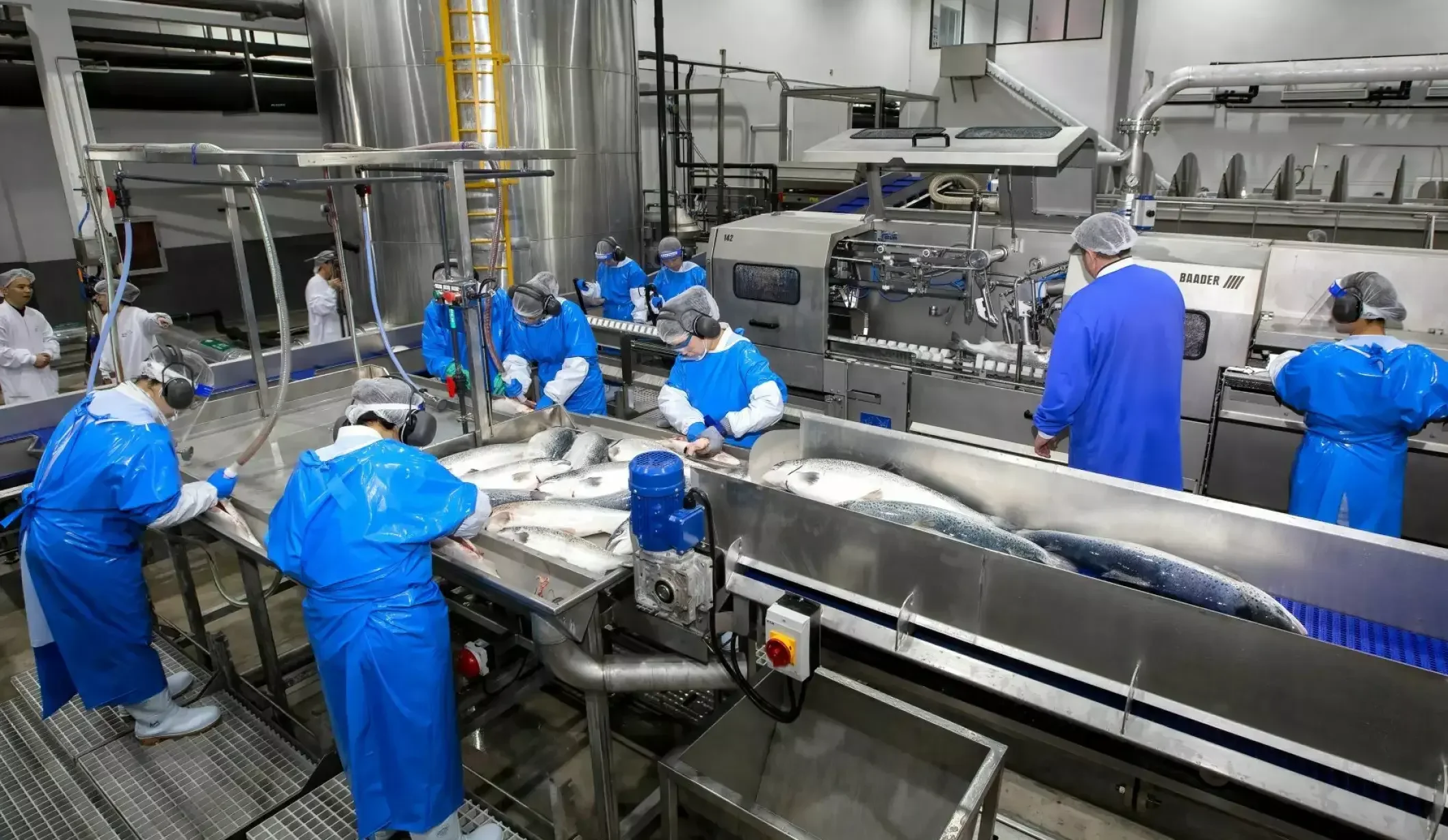
Photo: Nordic Aqua Partners
Land-based salmon projects are usually sold with a familiar cost story. Early production is expensive. As biomass builds, fixed costs are spread across more kilograms, operating routines improve and production cost falls towards a steady-state target. For investors, the obvious question is whether that cost curve is actually arriving.
Unfortunately, the comparison is less straightforward than it sounds.
If a project raised capital in 2021 on the promise of producing salmon for NOK50/kg, it would be unreasonable to compare that number directly with a 2026 production cost and ignore what has happened to feed, labour, energy and other inputs in the meantime.
But the opposite approach is not particularly useful either. If management simply replaces the old target with a new one whenever costs rise, the original investment thesis gradually disappears.
The answer, I think, is to rebase the target — not reset it.
Call the metric Cost Ramp Delivery.
The principle is simple: preserve the original biological and operating assumptions, update the prices of inputs that are genuinely outside management’s control, and compare that adjusted cost with the cost the farm is actually achieving.
That distinction matters.
If feed prices rise by 25%, the original feed-cost assumption should rise with them. If FCR deteriorates by 25%, it should not.
If wages rise with the labour market, adjust for wage inflation. If the farm requires 30% more people than planned, don’t.
If electricity prices increase, rebase the electricity price. If the system consumes materially more kWh per kilogram than the design assumed, leave that in the actual cost.
The objective is not to preserve an obsolete nominal number. It is to preserve the original operating thesis.
Nordic Aqua provides a useful example
Nordic Aqua Partners is particularly interesting because the company itself has effectively done part of this exercise. In its H2 2021 materials, Nordic Aqua projected an EBITDA production cost of approximately NOK41/kg HOG once the first 8,000 tons of capacity were operating. The cost curve then continued lower as the project scaled towards 20,000 tons.
Then their reported feed prices surged.
By Q3 2022, Nordic Aqua had revised its 8,000-ton EBITDA cost assumption to NOK49/kg. Importantly, the company was explicit about the reason: sharply higher feed prices. The revised calculation assumed feed cost of NOK24/kg HOG, compared with a two-year average of NOK21 and a then-current price of NOK28.
That is an important distinction.
The farm had not suddenly become 20% less efficient. A major externally priced input had changed.
Fast forward to Q2 2026.
Nordic Aqua says Stage 1 and Stage 2 have now reached full production run-rate, representing 8,000 tons of annual capacity. Q2 biomass production was 2,294 tons, harvest was 1,362 tons HOG and farming cost was €6.05/kg, down from €7.94/kg a year earlier.
So has the cost thesis been delivered?
Not quite — but it is getting much closer.
By 2024, Nordic Aqua’s project economics were being presented in euros, with an expected farming cost of approximately €5.40/kg HOG at 8,000 tons. Its current €6.05/kg is therefore still around 12% above that more contemporary benchmark.
I would not pretend that this is a perfectly clean Cost Ramp Delivery calculation. Currencies have changed, input prices have continued to move and the definitions used in some of the company’s earlier cost disclosures are not identical to those used today.
A rigorous calculation would reconstruct the original cost stack and adjust each externally priced input separately.
But the principle is more important than false precision.
Nordic Aqua’s current result is clearly much closer to the economics originally presented to investors than a simplistic comparison with a five-year-old nominal target would suggest. Costs have also fallen substantially as production has increased.
What shouldn’t be adjusted?
There is one adjustment I would specifically avoid.
Poor capacity utilization should not be normalized away.
If a facility was supposed to be producing 8,000 tons but is only producing 5,000, the resulting increase in fixed cost per kilogram is not inflation. It is part of the failure to deliver the investment thesis. Otherwise, a missed production ramp can conveniently become the explanation for a missed cost ramp.
The distinction also applies within the cost stack: external price changes should be rebased, while operational underperformance should remain visible in the result. Cost Ramp Delivery therefore needs to distinguish between two fundamentally different reasons a cost target was missed:
The world changed, or the farm did not perform as expected.
That is harder than simply comparing two headline numbers, but it tells investors considerably more.
Nordic Aqua is also a useful example because the result is not particularly damning. Biological performance is strong, Stage 1+2 has reached full run-rate and realized farming costs have fallen materially. The company also reports lower costs currently being transferred into standing biomass, although I would treat those as evidence of direction rather than performance already delivered.
The question is simply whether the operating economics have converged with those used to justify the investment.
An old nominal target is not a fair benchmark.
A newly revised target is not much of a benchmark at all.
The useful benchmark sits between the two:
Keep the original operating assumptions. Rebase the things management could not control. Then measure what was actually delivered.
The original cost target may no longer be relevant.
The original cost thesis still is.