

The Cost of Getting There Late
Land-based salmon companies report plenty of operating metrics. Survival, growth, standing biomass, average weight, feed conversion and harvest volume all provide useful information about how the fish are performing.
But for an investor, these standard metrics may be missing something important: how closely current performance resembles the investment case originally presented to shareholders.
My next few articles will look at alternative metrics that, I think, do a better job of making that comparison.
The first — Production Ramp Delivery — measures whether production is arriving on the timetable investors originally funded.
That is subtly different from asking how much of a facility’s nameplate capacity has been achieved.
A newly commissioned 20,000-ton farm producing 5,000 tons in its first year may be performing perfectly well if 5,000 tons was always the plan. Conversely, a facility producing 10,000 tons may sound considerably more impressive. But if investors were originally told to expect 18,000 tons by this stage, the investment case is substantially behind schedule.
Production Ramp Delivery is intended to capture that distinction.
The calculation is straightforward:
Cumulative saleable production achieved divided by cumulative production anticipated at the same point in the original investment plan.
The important words are cumulative and original.
Why cumulative production matters
Land-based facilities take several years to reach full utilization. Looking at a single quarter, or annualizing the most recent harvest, can therefore obscure much of what has happened during the ramp.
Suppose a 20,000-ton facility was originally projected to harvest:
5,000 tons in Year 1
12,000 tons in Year 2
18,000 tons in Year 3
20,000 tons thereafter
If it instead produces 3,000, 8,000 and 15,000 tons, management may quite reasonably point to the 15,000-ton run rate and the continuing trajectory toward 20,000 tons.
But the original investment case anticipated 35,000 tons of production during those first three years. Only 26,000 tons were actually produced.
Production Ramp Delivery is therefore 74%.
More importantly, the missing 9,000 tons should not simply be thought of as production deferred into the future.
A facility has a finite amount of productive capacity in each year. If it eventually reaches the same 20,000-ton annual output assumed in the original investment case, there is normally nowhere for those missing tons to reappear.
Recovering them would require the facility to operate above the production level originally assumed, or to extend its productive life beyond the period used to underwrite the investment.
Otherwise, the production — and the cash flow it was expected to generate — is gone.
Even if some of those tons can eventually be recovered, their economic value cannot be fully recovered. Cash generated two or three years later is worth less than cash generated on schedule, while the capital invested in the facility has continued to incur financing costs and demand a return throughout the delay.
A delayed production ramp is therefore not merely a delayed investment return. It is usually a smaller investment return.
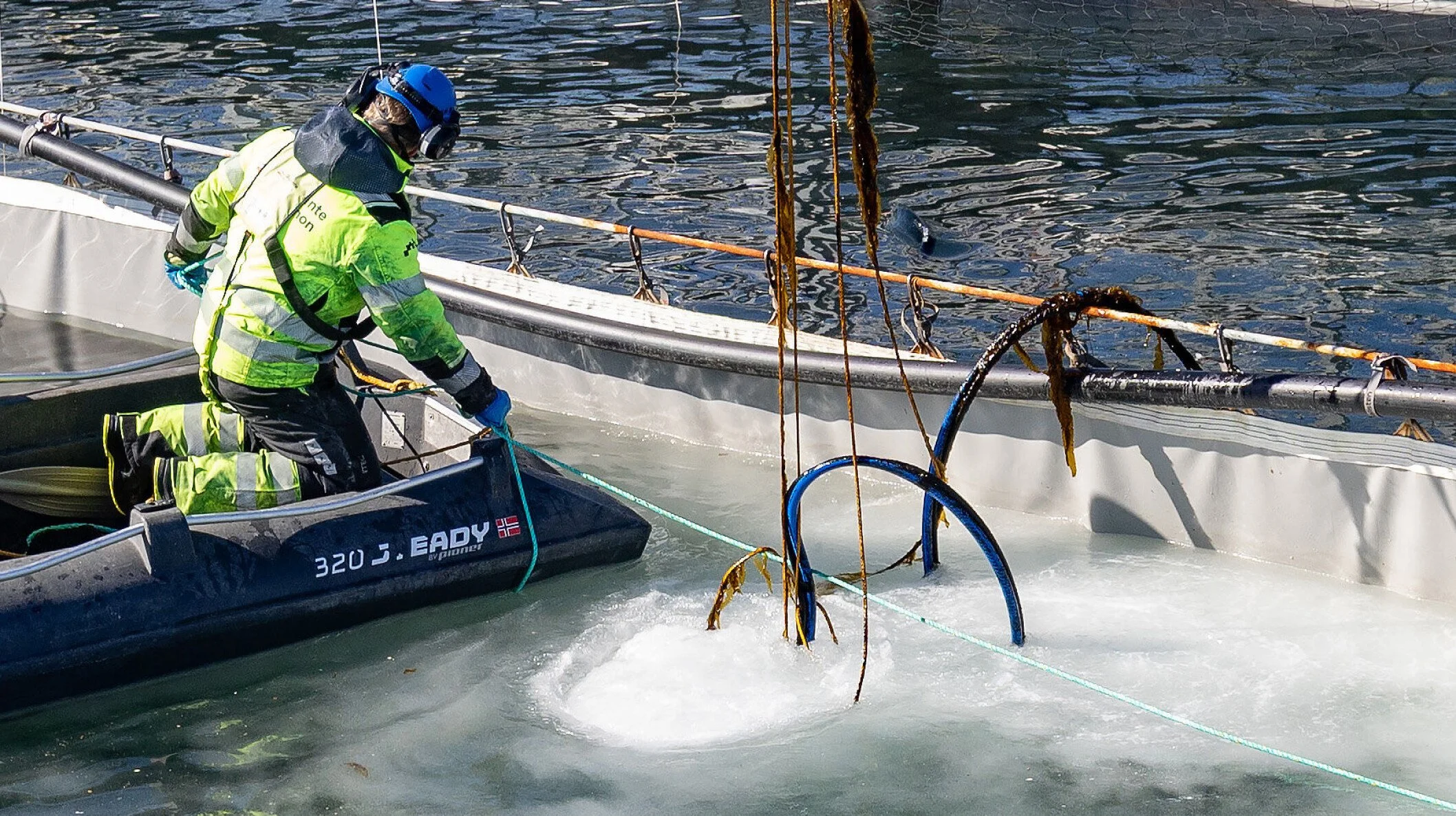
Photo - Gigante Salmon
Gigante Salmon provides an interesting example
When Gigante Salmon presented its project to investors in 2021, the production ramp was quite explicit.
The planned 16,000-ton HOG facility was expected to begin production in 2023, followed by projected harvests of approximately 900 tons in 2024, 5,000 tons in 2025, 7,000 tons in 2026 and 16,000 tons in 2027.
By the end of 2025, investors could therefore reasonably have expected cumulative harvests of approximately 5,900 tons.
Actual cumulative harvest through the end of 2025 was approximately 1,040 tons HOG.
On that basis:
Production Ramp Delivery = 1,040 / 5,900 = approximately 18%.
That number tells me considerably more about the investment than saying Gigante had produced roughly 1,000 tons from a facility ultimately designed for 16,000 tons.
The latter comparison is almost meaningless. A plant still moving through construction and commissioning will naturally operate well below nameplate capacity.
The former asks whether the production ramp investors originally funded has occurred.
It hasn’t.
By the end of 2025, approximately 4,900 tons of production that formed part of the original investment case had failed to materialize.
If Gigante eventually reaches 16,000 tons of annual production, that would be an important operating accomplishment. But reaching 16,000 tons later does not recover the capacity-years lost along the way.
The farm can ultimately become a successful salmon farm while the original investment still delivers a materially lower return than investors were initially led to expect.
Plans, of course, change. Companies revise production guidance as circumstances change, and those revised plans are useful for judging current operations. But they should not erase the original investment case.
Two questions should therefore remain front and center:
Is the business becoming the business investors originally funded, on the timetable they were told it would?
And perhaps more importantly:
How much expected production has already been lost getting there?
Reaching nameplate capacity "eventually" does not restore the production — or the return — lost along the way.