

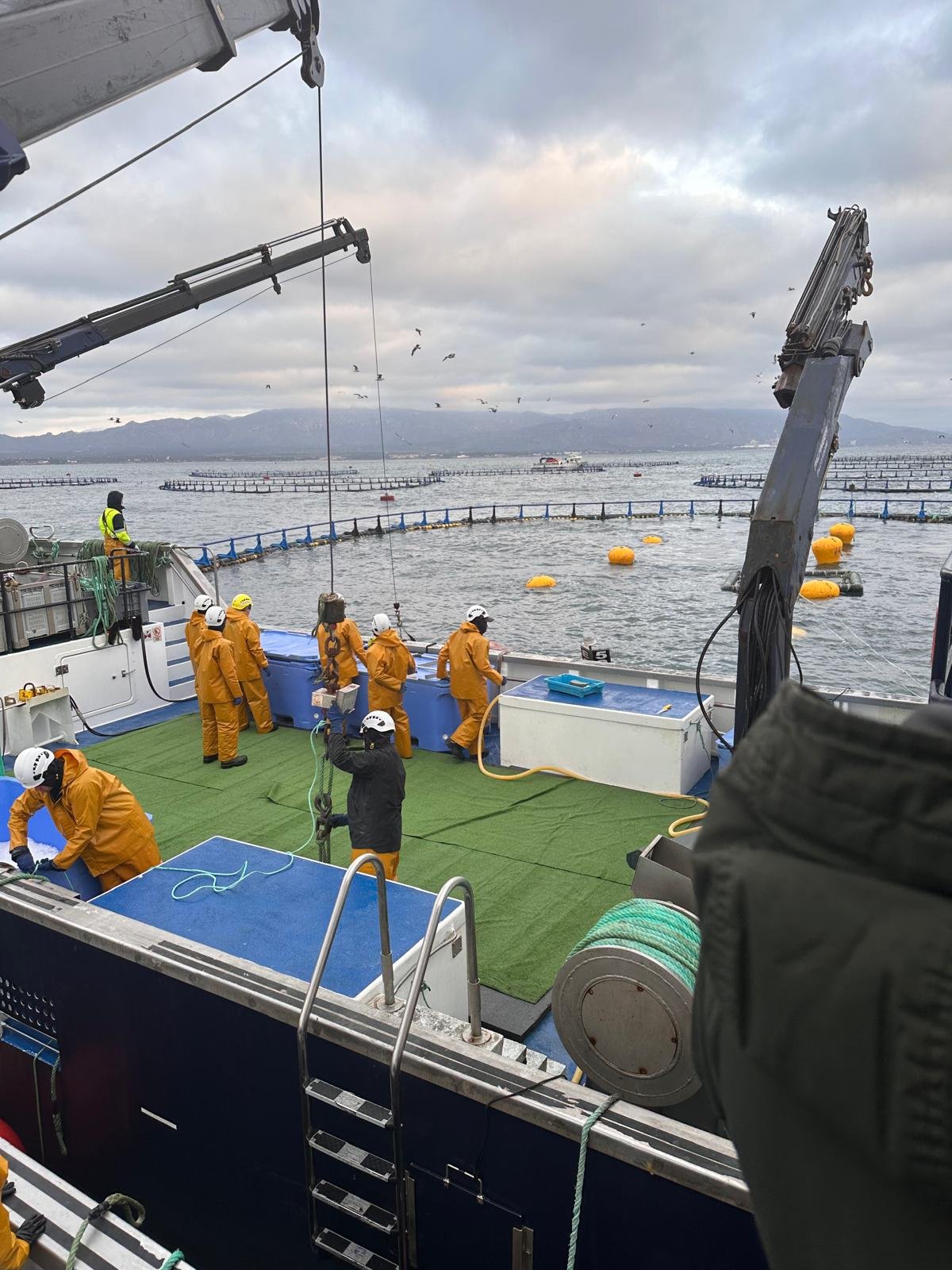
Why remote farming regions need operating models that reduce key-person risk, failure concentration, and crisis-response bottlenecks
Aquaculture is often discussed as if the primary challenge is building the farm.
Secure the sites. Raise the capital. Install the cages, tanks, pipes, pumps, barges, feed systems, hatcheries, and processing capacity. Recruit experienced people. Establish the biological plan. Then grow.
In mature aquaculture regions, that is already difficult. In remote or emerging regions, it is a different proposition.
The issue is not simply whether fish can be farmed in a particular location. The issue is whether the operating model has been designed for a place where skilled people may be difficult to recruit, experienced managers may be hard to retain, specialist equipment may be far away, and small failures may have fewer buffers before they become large ones. In these regions, resilience has to be designed before it is tested.
That means thinking beyond average production cost, theoretical carrying capacity, and planned staffing charts. It means asking whether the business has enough people, equipment, communication discipline, and decision-making capacity to prevent a local problem from becoming a company-level event.
Remote regions change the risk equation
Many aquaculture projects are located in places that are operationally attractive but personally and logistically difficult. The water may be good. The sites may be available. The regulatory or political case may be strong. The region may need investment and employment. But the community may be isolated, housing may be limited, schools may be weak, travel may be difficult, and professional opportunities for spouses or families may be narrow.
That creates a workforce problem that cannot always be solved with salary.
Companies may be able to recruit experienced people for a period of time. They may bring in foreign managers, technical specialists, consultants, or senior operators from more mature regions. But it is risky to design an operating model around the assumption that these people will remain indefinitely, or that similarly experienced replacements will always be available when needed.
The risk is not simply that experienced people are hard to recruit.
The risk is that the farm has been designed as if they will always be available.
That assumption can show up in subtle ways. Critical knowledge may sit in the head of one manager. Crisis response may depend on one person’s judgment. Communication may rely on informal relationships rather than clear systems. Equipment plans may assume rapid access to vessels, divers, mechanics, harvest crews, or mortality handling capacity that does not really exist at scale.
In stable conditions, these weaknesses can remain hidden.
When the system is stressed, they become visible quickly.
Efficiency is not the same as resilience
Aquaculture businesses are under constant pressure to reduce cost. That is understandable. Margins are cyclical, biological risk is high, capital is expensive, and investors expect scale efficiencies to show up in unit economics.
But in remote regions, the pursuit of efficiency can create concentration risk.
Large cages or production units are a useful example. On a spreadsheet, larger units can look attractive. They may reduce the number of cages, moorings, nets, feed points, inspections, and interventions. They may lower operating cost per kilogram and simplify the production plan.
But the spreadsheet is usually better at capturing savings than consequences.
What happens if one of those units has a serious problem? Does the region have the vessels required to manage it? Are there enough divers, cranes, pumps, oxygen capacity, harvest options, mortality handling systems, and trained people available quickly? Can the company split, harvest, treat, transfer, or recover fish at the scale required?
Large production units can reduce the number of things a company manages, while increasing the consequence of each thing it fails to manage.
That does not mean large systems are wrong. Scale can be necessary. Larger units may be appropriate in the right setting. But the design has to be evaluated against the response capacity that actually exists, not the response capacity assumed in the model.
In mature regions, a company may draw on a dense network of vessels, service providers, maintenance crews, health specialists, processors, and experienced labour. In remote regions, the company may be the network.
That changes the calculation. A lower-cost design that reduces operational flexibility may not be lower risk. It may simply turn low-probability failures into high-consequence events.
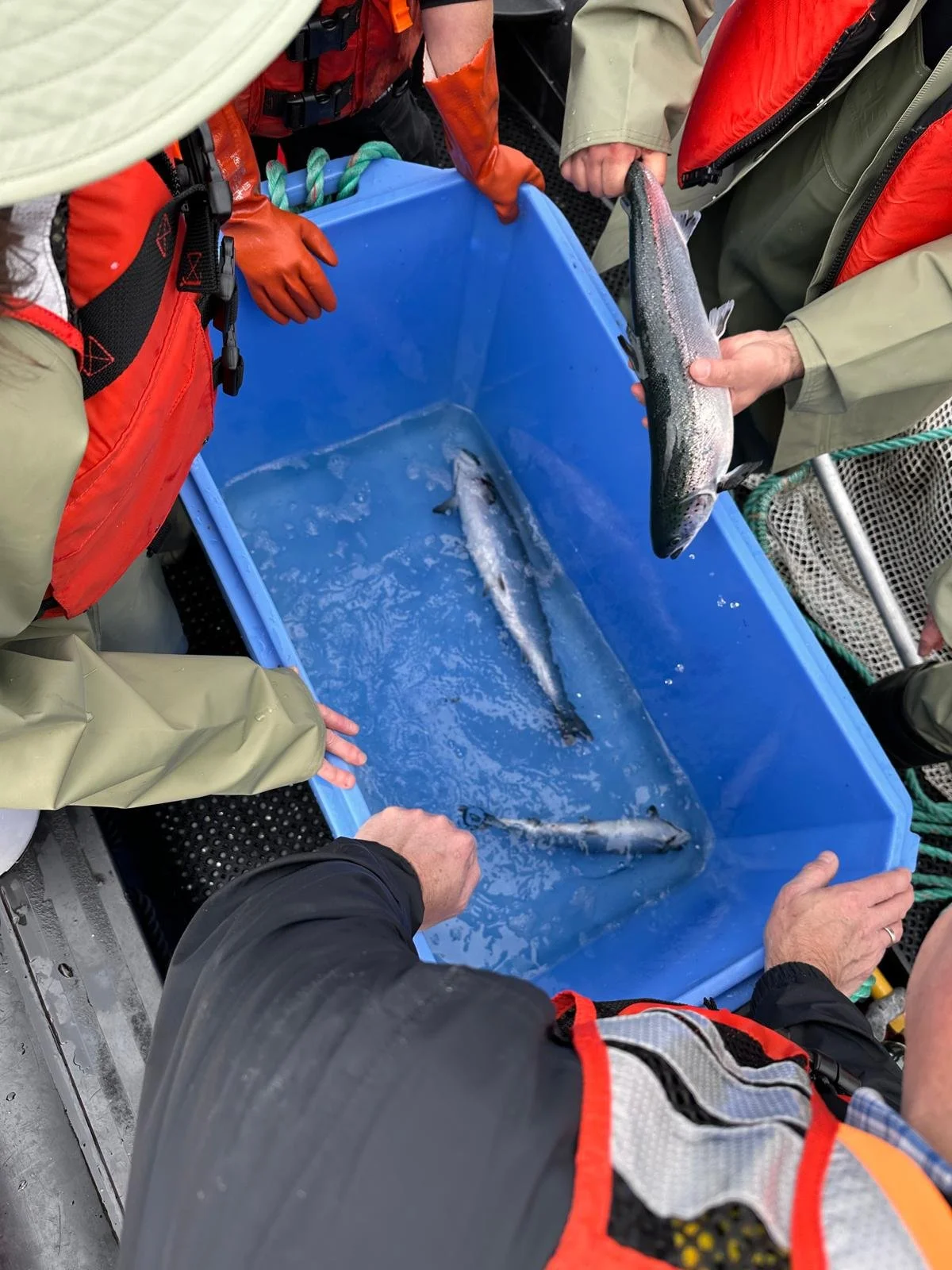
Communication is crisis infrastructure
Communication routines are another form of resilience that can look inefficient when things are going well.
Frequent cross-functional meetings can seem like overhead. Pulling farm staff, maintenance teams, fish health, logistics, processing, finance, and senior managers into regular conversations may feel excessive when production is stable and the agenda is routine.
But the purpose of regular communication is not only to manage today’s agenda.
It is to build the relationships and shared language the organization will need when something starts to go wrong.
In a crisis, companies rarely suffer from too much trust, clarity, or familiarity between functions. They suffer from the opposite. People hesitate. Information gets softened. Weak signals are not escalated. Site staff may be unsure whether senior managers want to hear early concerns. Support teams may not understand the urgency. Decision-makers may not know which voices to trust.
The result is lost time.
In aquaculture, lost time often becomes lost biomass.
Communication routines that look excessive in stable periods can become critical infrastructure in unstable ones.
This is especially true in isolated regions, where the distance between observation and action is often too long. The people closest to the fish may see the first signs of a problem, but the organization only benefits from that knowledge if they feel confident enough to raise concerns and if the system is designed to respond.
Senior expertise should multiply capability
Experienced managers matter. In difficult regions, they may matter even more.
The question is what the business does with that expertise.
If senior people are used only to control decisions, approve actions, and personally solve problems, the company may look stable while becoming more dependent on a small number of individuals. That is not resilience. It is key-person risk.
The best senior people do not make themselves indispensable. They make the organization harder to break.
That requires deliberate knowledge transfer. Local supervisors need to understand not only what decisions are being made, but why. Technicians need to learn how experienced managers recognize weak signals. Farm teams need to participate in post-event reviews, not merely receive instructions after the fact. Decision rights need to be transferred over time, with coaching and accountability.
This is not an argument against imported expertise. In many emerging regions, outside expertise is essential. Experienced people from mature farming regions can bring standards, urgency, pattern recognition, and hard-earned lessons that would be expensive to learn from scratch.
But the value of that expertise should be measured by more than short-term operating performance.
Did it build better local judgment? Did it strengthen systems? Did it create clearer escalation paths? Did it improve training? Did it reduce dependence on informal knowledge? Did the farm become more resilient after the expert arrived, or merely more dependent on the expert staying?
Remote operations should assume that even successful appointments may not be permanent. People move on. Families make decisions. Better opportunities appear. Fatigue accumulates. That is normal workforce reality.
The failure is when critical knowledge leaves with them.
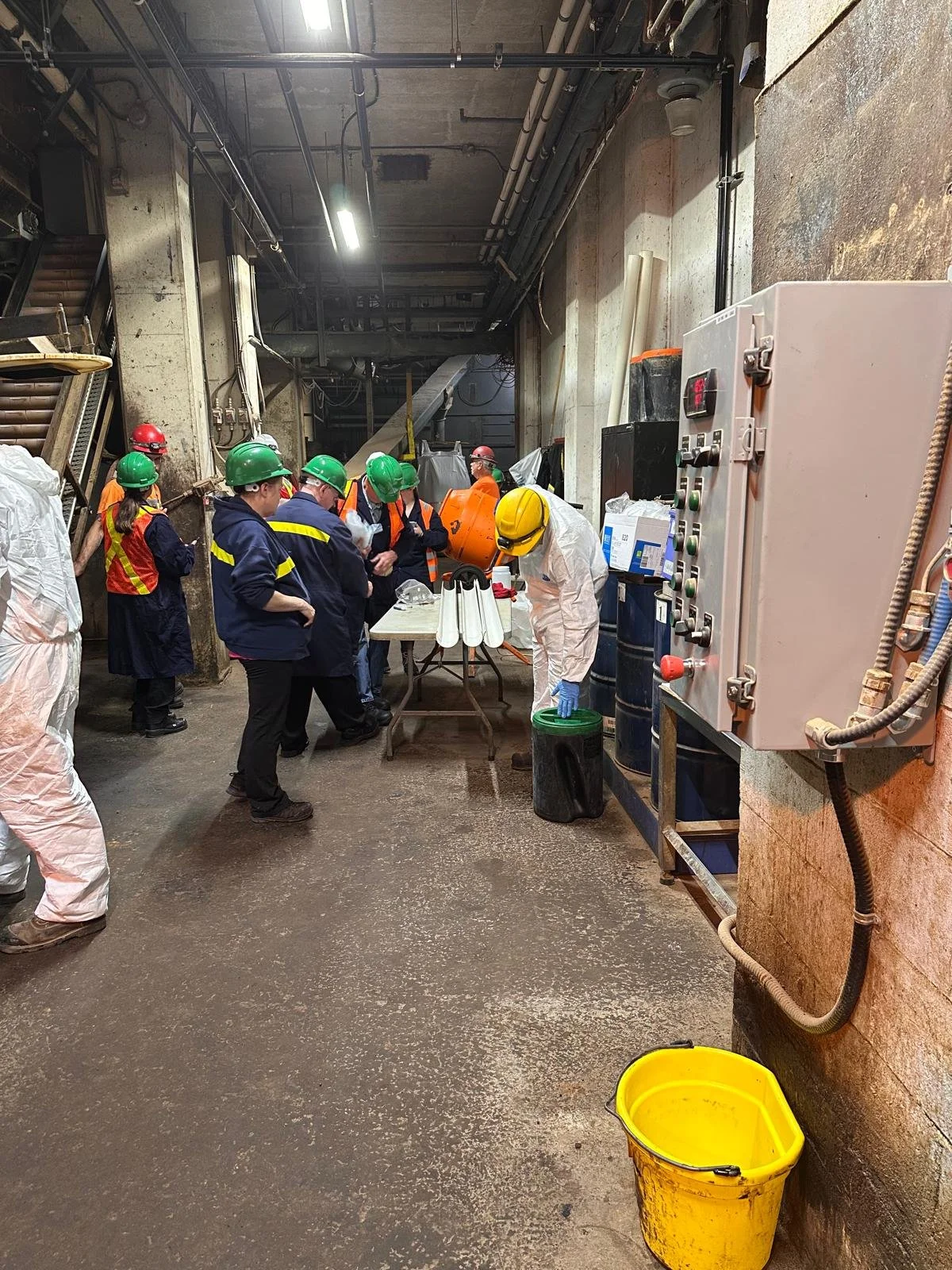
Design for imperfect conditions
The best remote operating models are not built around perfect execution. They are built around the assumption that people will be tired, equipment will fail, weather will disrupt plans, specialists will be unavailable, and some decisions will need to be made with incomplete information. That means resilience has to be practical.
Production systems should be designed with response capacity in mind. If a unit fails, the company should know what equipment, people, vessels, harvest capacity, oxygen systems, and mortality handling options are actually available.
Communication systems should be tested before crisis. If a farm employee sees something concerning, the escalation path should be obvious, fast, and safe.
Training should be continuous, not limited to onboarding. The most important learning often happens around stressful events: low oxygen, poor appetite, disease suspicion, equipment failure, harmful algae, jellyfish, bad weather, unexpected mortality, or harvest pressure.
Documentation should capture operating judgment, not just procedures. The most valuable knowledge in aquaculture is often the reasoning behind decisions. Local employees should be developed into decision-makers, not permanent assistants to outside expertise. Career paths need to lead to real authority, not just longer service.
And farm design should limit the ability of any single issue to cascade into a threat to the whole business. Compartmentalization matters. Redundancy matters. Response options matter. So does humility about what the organization can realistically manage under stress.
The real test
Remote aquaculture regions are not doomed by isolation. Many have real advantages: committed local workforces, strong community ties, good natural resources, supportive governments, and room to build industries that matter.
But isolation changes the standard of management.
It makes informal systems more dangerous. It makes key-person risk more significant. It makes external benchmarks more valuable. It makes logistics part of biological risk. It makes communication a form of infrastructure. And it makes resilience something that has to be designed into the business before the first serious test arrives.
A remote farm staffed by capable people can still be fragile if the operating model depends on too few individuals, too little redundancy, and too many assumptions about help arriving when needed.
A remote farm designed to spread knowledge, shorten escalation paths, match production scale to response capacity, and develop local decision-makers has a much better chance of becoming resilient.
The strongest aquaculture operations are not the ones that never encounter problems.
They are the ones designed so that problems have fewer ways to become disasters.