

Enabling Technology and the Adoption Paradox
Aquaculture investors are understandably attracted to enabling technology.
Automated biomass measurement, AI-assisted feeding, automated lice detection and an expanding collection of sensors and software all offer the possibility of improving farming performance without taking direct exposure to fish mortality, salmon prices or many of the other risks associated with primary production.
On paper, some of these propositions look compelling. Small improvements in feed conversion can generate substantial savings. Better biomass estimates can improve feeding and harvest planning. Earlier detection of lice or behavioural changes can allow farmers to intervene before relatively small problems become expensive ones.
The paradox is that the better the farmer is performing financially, the less urgent many of these economically compelling improvements become.
In my consulting work, I have repeatedly seen opportunities to improve efficiency struggle to gain traction when the underlying farming business is already performing well financially. The economics of the improvement may be perfectly credible. The saving may even be substantial when multiplied across a large production base.
But management attention is scarce.
Implementing something new usually involves trials, integration, staff training and the possibility that the technology will not perform quite as advertised. Existing systems may be imperfect, but they are understood. When salmon prices are strong and farming margins are healthy, an improvement worth a few cents per kilogram can struggle to compete with the many other issues demanding management attention.
The relevant question is not simply whether the technology works.
It is whether the customer feels enough pain to feel change is urgent and necessary.
That makes me wonder about one technology we now take almost completely for granted: feed cameras.
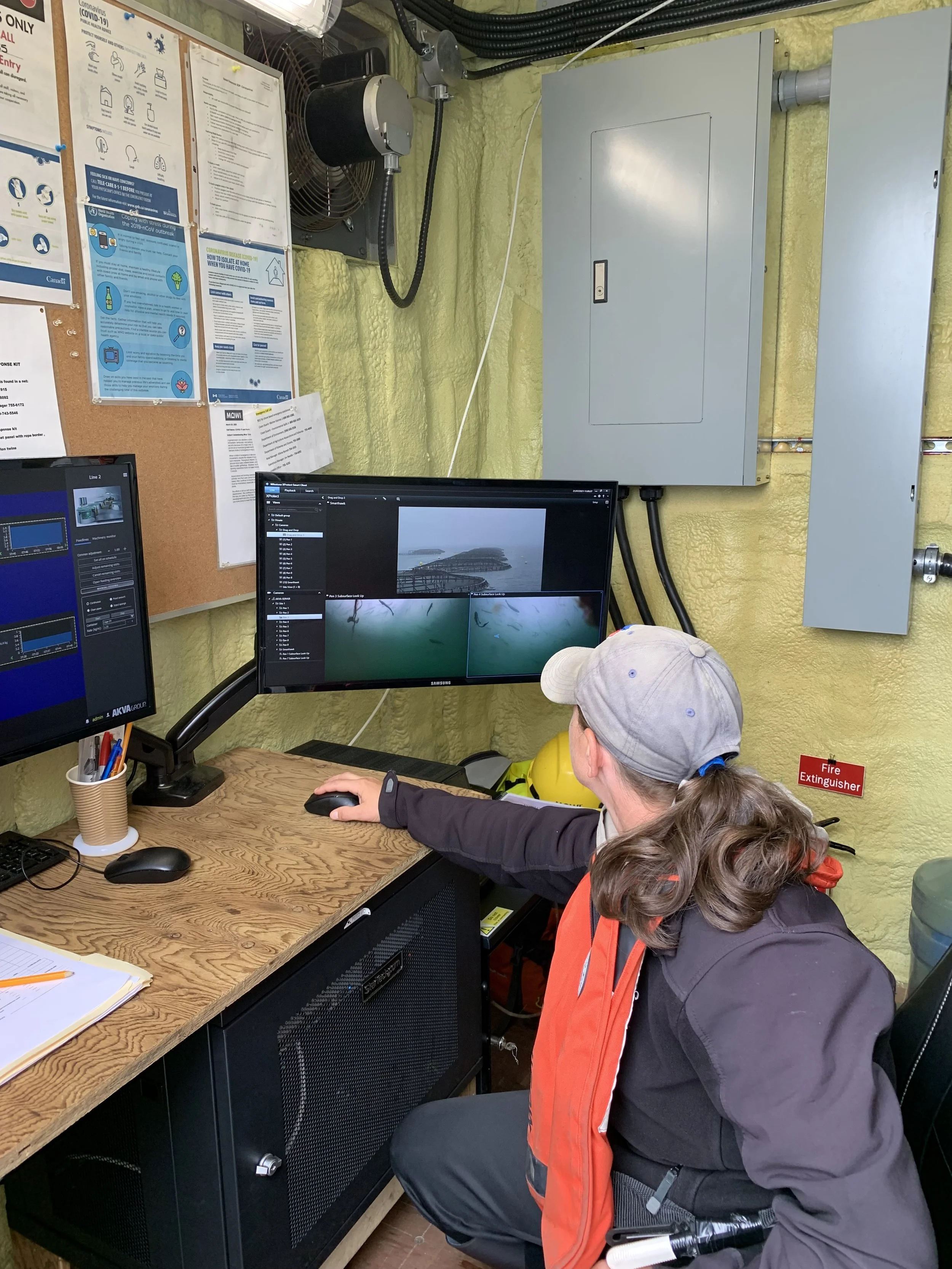
Photo - Alan Cook
Modern salmon farming without cameras monitoring feeding behaviour is difficult to imagine. They are part of the basic architecture of feeding fish. Nobody prepares an investment case every year explaining why the farm should continue using them.
But was their widespread adoption inevitable?
Had feed cameras arrived during a period when salmon farmers were enjoying exceptional margins and paying relatively little attention to incremental feed savings, would adoption have occurred as quickly?
Perhaps. The underlying technology would still have made sense. But I suspect the willingness to experiment would have been very different.
A farmer intensely focused on reducing feed waste has a powerful reason to test a new tool. A farmer making exceptional returns with the existing system has a much higher tolerance for inefficiency.
That creates an interesting problem for investors evaluating new aquaculture technologies. The size of the opportunity is often presented in terms of the value a technology could theoretically create. An AI feeding company might demonstrate that a small improvement in feed conversion across a large farming business is worth millions. A biomass-measurement company can make the same argument around inventory accuracy.
Those calculations may be entirely correct.
But theoretical value is not the same as willingness to pay.
The real competitor to an automated biomass system may not be another sophisticated camera. It may be an imperfect estimate that the farmer already has, understands and has learned to live with. The competitor to a new feeding algorithm may be an experienced feeding team using equipment already installed.
“Good enough” can be a formidable incumbent.
The more interesting question for investors may therefore be whether a technology has a credible path from optional improvement to something the customer increasingly feels it should have.
Feed cameras have made that journey. Once a technology becomes embedded in normal operating practice, the commercial proposition changes. The supplier no longer has to convince the industry that the problem is worth solving; the competition moves toward who solves it best.
When margins are compressed, farmers search aggressively for savings. When margins are exceptional, inefficiencies become easier to tolerate.
That doesn't make enabling technology a poor place to invest. Some of the most important changes in aquaculture will undoubtedly come from better measurement, automation and decision support.
But demonstrating that a technology creates value is only the beginning of the investment case.
The harder question is what will make the farmer care enough to buy it.
A technology that promises to make a profitable operation slightly better can spend years trapped in trials and demonstrations. The more attractive opportunity may be one where economics, labour, regulation or industry practice creates a clear path from “this could improve our operation” to “we really should have this.”
In aquaculture technology, the difference between those two statements may determine who actually captures the opportunity.