

Atlantic Sapphire: The Rational Case for Doubling Down
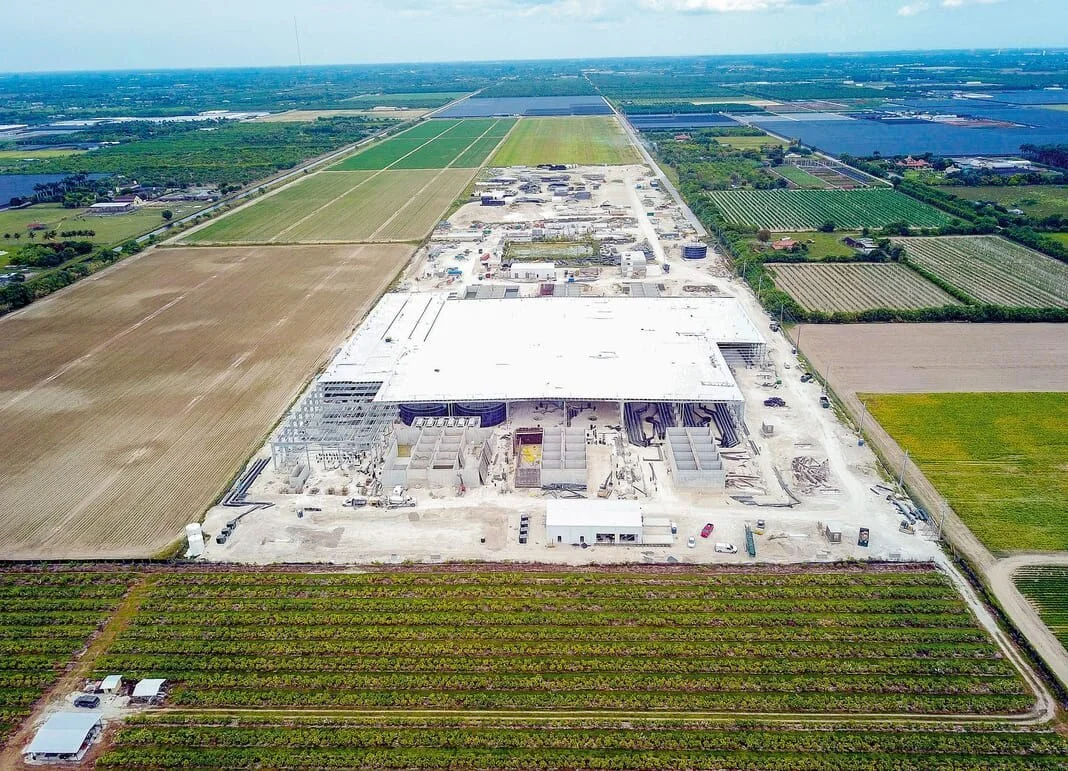
Photo: Atlantic Sapphire
Initially, I was tempted to dismiss Atlantic Sapphire’s latest restructuring as a case of investors throwing good money after bad. The company has consumed extraordinary amounts of capital, remained deeply loss-making and repeatedly required new financing. Its board has now acknowledged that the existing equity was most likely lost and that no viable alternative source of capital emerged. Yet the investors behind Coral HoldCo have chosen not only to remain involved, but to provide additional funding and take control of the company.
Why is walking away not the obvious choice?
At the end of 2025, Atlantic Sapphire reported assets of $135.8 million, liabilities of $123.9 million and book equity of only $11.9 million. Against $789.7 million of recorded share capital and share premium, the company had accumulated losses of approximately $772.8 million. Some of those losses reflect non-cash impairments rather than cash burned, but the broad conclusion is unavoidable: almost all of the accounting value contributed by shareholders has disappeared.
That is the correct starting point for Coral’s investors. Their original equity should not be treated as something that can still be protected. It has already failed.
But the operating asset remains.
Atlantic Sapphire still has a completed Phase 1 facility, fish in the system, trained employees and several years of accumulated operating experience. The company says biological stability, average harvest weight and superior-grade share have improved, although those gains still fall well short of financial sustainability.
The key element in thinking about the restructuring is how it impacts claims on any value that remains.
Coral’s members previously controlled roughly 62% of Atlantic Sapphire’s shares and 93.7% of its convertible loan. Under the refinancing, participating convertible lenders accept a 23% write-down and convert the remaining balance into equity at NOK 0.10 per share. Bridge financing is also converted or set off against new shares, and the investor group is providing at least $20 million of liquidity. Coral is expected to own more than 90% of the recapitalized company and intends to take it private.
The post-restructuring company will not be debt-free. Atlantic Sapphire had approximately $49 million of conventional borrowings at year-end, principally secured bank debt, and that obligation remains. But most of the roughly $61 million convertible loan, together with bridge claims advanced during 2026, will move off the creditor side of the balance sheet through write-down, conversion or set-off.
That is not a recovery of the old money. It is a reset of the company’s financial status.
Consider the decision from the perspective of an investor whose original minority stake is now worth almost nothing.
Walking away cements the loss. The company may fail, and a specialized facility that has consumed hundreds of millions of dollars could be sold under distress or cease operating. The investor loses both the original capital and any claim on the knowledge and infrastructure that capital created.
Reinvesting requires accepting further risk. Atlantic Sapphire’s board has been explicit that the current package does not fully cover the company’s estimated requirements for the next 12 months.
But the next dollar buys something very different from the first.
It buys participation in a control group rather than a small listed minority position. It enters after much of the construction cost, commissioning risk, redesign and operating learning has already been absorbed. It acquires exposure to a company carrying much less debt relative to equity. Most importantly, it captures a far greater proportion of any upside if the facility eventually reaches positive cash flow.
This creates an outcome that looks contradictory but is entirely possible: Atlantic Sapphire could remain a catastrophic investment for its original shareholders while becoming a successful investment for the group that recapitalizes it.
Suppose an investor lost $20 million on its original stake and contributes another $5 million through the restructuring. If the enlarged ownership interest is eventually worth $20 million, the investor still suffers an overall loss. But the decision to provide the final $5 million may have generated an excellent return compared with the near-zero recovery available from walking away.
The new investment should therefore be judged independently.
Does the risk-weighted value of the recapitalized business exceed the additional capital required from this point forward? Does control improve the investors’ ability to impact strategy? Is the Phase 1 facility capable of producing enough salmon at a positive margin to be worth more than the remaining bank debt and the new money?
Coral’s investors must retain some confidence. If they believed the facility was physically incapable of operating reliably, it would make further investment irrational.
But the belief required today is narrower than the belief that funded the original project. They no longer need Atlantic Sapphire to justify the full cost of building it. They only need the existing facility, after the capital structure has been reset, to become worth more than the incremental cost of saving it.
That is why this is not necessarily a case of investors refusing to recognize a sunk cost.
They may recognize the loss perfectly. Their conclusion appears to be that the best chance of recovering any meaningful value is not to defend the old investment, but to use its collapse to acquire control of the next one.