

The Economics of Having Few Good Alternatives
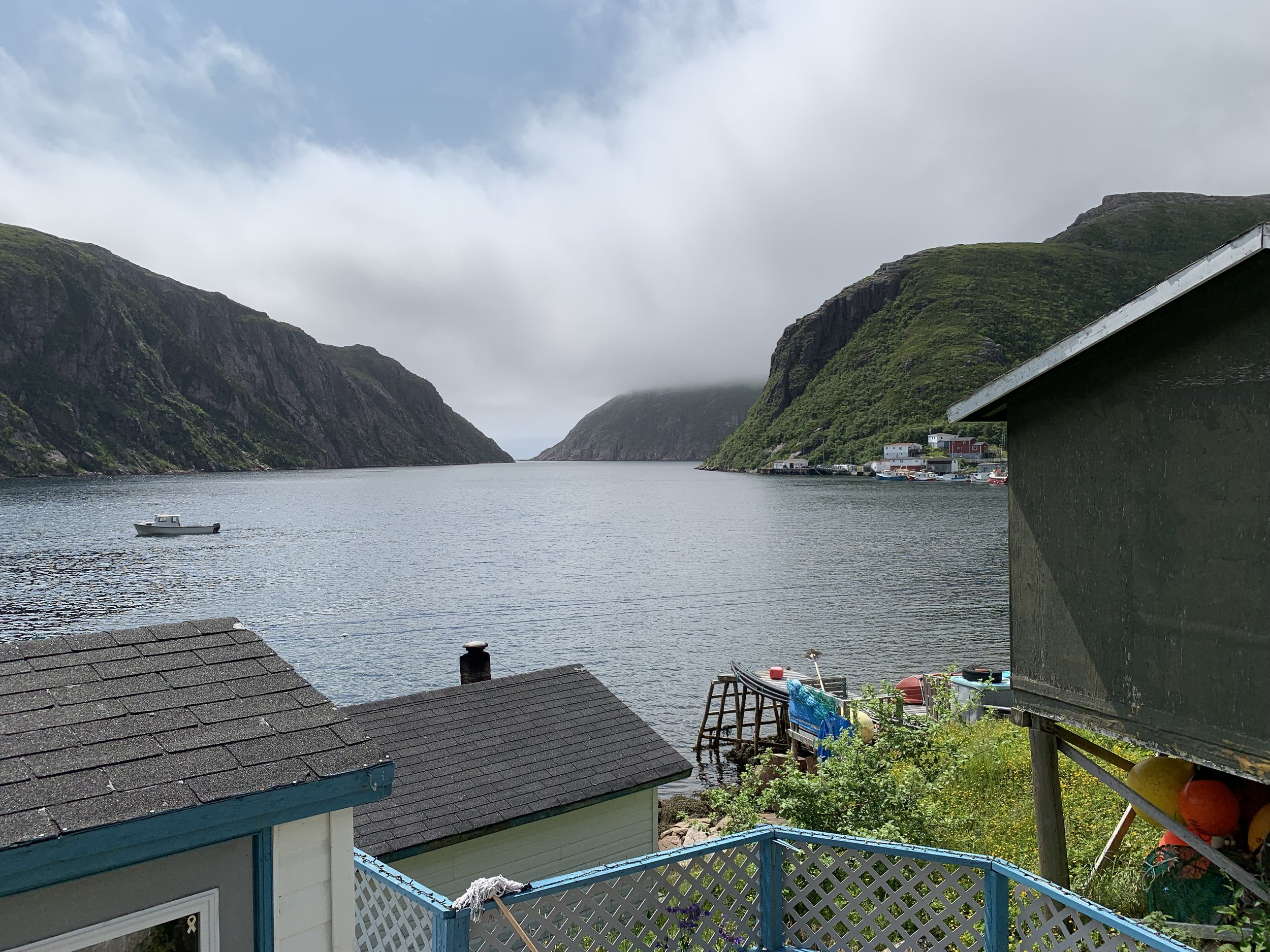
Photo - Alan Cook
Investors looking at aquaculture often focus on where value is created. I am increasingly convinced that the more useful question is who captures the value.
Consider three businesses that sit alongside salmon farming: feed, post-smolt production and wellboat services.
All three are important to production. All three require considerable technical capability and capital. And all three can have a meaningful impact on the economics of the fish farmer.
Yet their ability to retain a share of the value they create is very different.
Feed is perhaps the easiest place to start. It is one of the largest costs in salmon production, and relatively small improvements in feed conversion can create substantial value across a large farming business. Feed quality can affect growth, health and ultimately the amount of fish harvested.
But the feed producer operates within some fairly obvious commercial constraints. Most large farmers have access to several credible suppliers. Feed can be produced in advance, transported and stored, and farmers can move at least part of their purchasing between competing companies. A farmer may place considerable value on a particular feed formulation or supplier relationship, but there is usually an alternative.
Competition therefore limits how much of the value created by better feed performance the supplier gets to retain.
Post-smolt production presents a very different problem.
Larger smolts reduce time at sea, improve survival, increase license productivity and harvest volumes. The downstream value can be substantial, particularly where marine production capacity is constrained.
But the product is remarkably specific. A post-smolt producer may be growing millions of fish of a particular genetic origin to a particular size, for delivery at a particular time into a particular customer's production plan. As those fish approach delivery, the number of alternative customers that can use exactly that product may be very small.
Another farmer may need the fish two months later. It may need half as many fish or twice as many. Its sites may not be ready, or its health status and movement restrictions may make the transfer impossible.
The result is an unusual negotiating position. The farmer may depend heavily on receiving the fish it ordered, but the producer may be even more dependent on the farmer accepting them.
That matters enormously when thinking about value capture.
The post-smolt may create substantial value once it enters the farmer's production system, but much of the supplier's bargaining power disappears as the fish become increasingly tailored to one customer's requirements.
Wellboats sit at almost the opposite end of this equation.
Fish transport and lice treatment may represent only a small proportion of the eventual value of the salmon involved. Yet vessel operators have been able to earn margins that would be exceptional in most other parts of the aquaculture value chain.
Part of that undoubtedly reflects the capital intensity of the business. A modern specialist vessel is expensive to build, operate and replace, so high EBITDA margins should not automatically be confused with extraordinary economic returns.
But capital intensity alone does not explain the attraction of the business.
The vessel operator is selling something the farmer may need at a very specific moment.
If fish need to be moved on Thursday, a vessel available three weeks later has limited value. If lice pressure requires treatment, delaying the operation can mean lost growth, worsening fish welfare, regulatory problems, premature harvesting or increased mortality.
The price of the service is therefore influenced not simply by the cost of operating the vessel, but by the cost to the farmer of not having it.
And there is an important asymmetry.
The farmer needing a vessel tomorrow may have very few alternatives. The vessel operator, however, owns a mobile asset.
If Farmer A no longer needs the vessel, it can potentially move to Farmer B. Capacity can be shifted between companies, sites and, within limits, regions. The asset remains useful even if an individual customer's plans change.
Compare that with the post-smolt producer holding 900,000 fish grown for a particular delivery window.
Both businesses provide time-sensitive inputs to salmon production. Both may be important to the customer's operating plan. But the consequences of a cancelled transaction are very different.
The wellboat operator can sail away.
The post-smolt producer is left with 900,000 fish.
That difference goes a long way toward explaining their respective negotiating positions.
It also suggests a useful way for investors to think about businesses elsewhere in the aquaculture value chain. The question is not simply whether a product or service creates value for the farmer. Nor is it enough to determine whether the activity is technically difficult or essential to production.
The more revealing question may be what happens when the original transaction falls apart.
How many alternatives does the customer have?
And how many alternatives does the supplier have?
Feed sits somewhere near the middle. Farmers can switch suppliers and feed companies can switch customers. Neither side is completely captive.
Post-smolt becomes increasingly customer-specific as the production cycle progresses. The supplier's alternatives can narrow faster than the customer's.
Specialist vessels can produce the opposite situation. When capacity is tight, the farmer's alternatives narrow while the supplier retains the ability to take its asset elsewhere.
That is a powerful negotiating position.
It may also explain something that otherwise looks slightly peculiar in the salmon value chain. The businesses that contribute the most to creating biological value are not necessarily the businesses that capture the largest share of the economics.
Value creation and value capture are different things.
For investors, understanding the difference may be more important than deciding which part of the production chain looks most technologically sophisticated or strategically important.
Sometimes the best place to invest is not where the most value is being created.
It is where the negotiating position makes it hardest for that value to escape.